

FIFO is one of those simple business ideas that sounds technical at first but becomes very easy once you break it down. Whether you are running a store, managing a warehouse, studying accounting, working in food service, or learning basic computer science, you may come across the term FIFO.
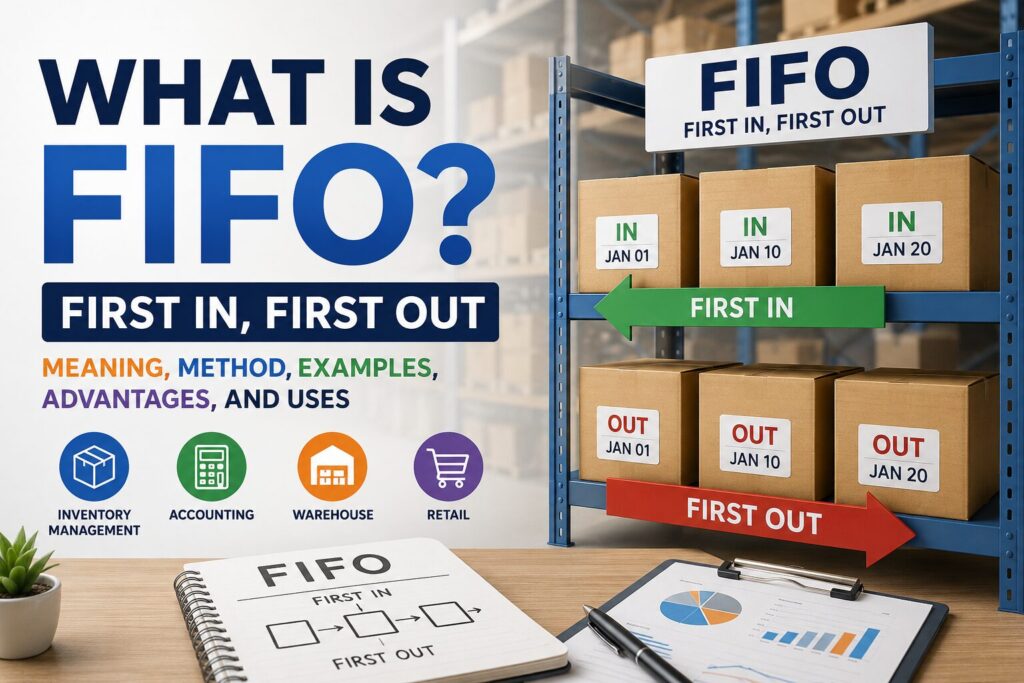
FIFO stands for First In, First Out. It means the item that enters a system first should be the first one to leave. In everyday life, this is similar to using the older milk carton in your fridge before opening the new one. The same idea applies to inventory, accounting, supply chains, warehouses, restaurants, manufacturing, and even data queues.
For businesses, the FIFO method helps keep stock organized, reduces waste, improves inventory accuracy, and makes it easier to track costs. It is especially useful when products have expiry dates, changing prices, or quality concerns over time.
What Is FIFO?
FIFO means First In, First Out. In simple words, the first item received, stored, bought, or added is the first item sold, used, processed, or removed.
In inventory management, FIFO means older inventory should move out before newer inventory. For example, if a grocery store receives bread on Monday and then receives more bread on Thursday, the Monday stock should be sold first. This helps prevent older products from expiring or becoming unsellable.
FIFO is also used in accounting as an inventory valuation method. In that case, it assumes the oldest inventory costs are used first when calculating the cost of goods sold. This can affect profit, ending inventory value, and financial reporting.
The basic idea is simple: older items should not sit behind newer items. FIFO creates a clean, logical flow for stock, materials, products, or data.
FIFO Meaning in Simple Words
The full form of FIFO is First In, First Out.
The phrase has two parts:
First In
“First In” refers to the first items that enter a system. These could be products received in a warehouse, ingredients delivered to a restaurant, raw materials bought by a factory, or data added to a queue.
For example, if a beauty store receives 100 shampoo bottles on January 1 and another 100 bottles on January 10, the January 1 stock is the “first in.”
First Out
“First Out” means those earlier items should leave the system first. In the beauty store example, the January 1 shampoo bottles should be sold before the January 10 stock.
This kind of stock rotation is important because products can expire, lose quality, become outdated, or get damaged if they sit too long. FIFO keeps the product flow natural and helps businesses avoid waste.
How Does the FIFO Method Work?
The FIFO method works by creating a clear order for how inventory is received, stored, sold, and recorded. It can be used physically in a warehouse and financially in accounting records.
Here is how FIFO usually works:
Stock Comes In
When new stock arrives, the business records details such as the date, quantity, batch number, purchase cost, and supplier. This step is important because FIFO depends on knowing which stock arrived first.
Older Stock Is Placed First
Older inventory is placed where staff can easily pick, sell, or use it before newer inventory. In a store, this may mean placing older products at the front of the shelf. In a warehouse, it may mean organizing pallets by receiving date.
Stock Leaves in the Same Order
When a sale happens or materials are used, the oldest stock is moved out first. This keeps inventory flowing in the same order it arrived.
Inventory Records Are Updated
After products are sold or used, the business updates its inventory records. In accounting, FIFO also helps calculate cost of goods sold, ending inventory, and inventory value.
A simple FIFO process may look like this:
- Receive stock and record the date.
- Label items clearly.
- Place older stock in the easiest picking position.
- Sell or use older inventory first.
- Update inventory records after each transaction.
This system sounds basic, but it can make a big difference in busy businesses where stock moves every day.
FIFO Example: A Simple Real-Life Scenario
Let’s say a small retail store sells conditioner bottles.
In January, the store buys 50 bottles for $4 each.
In February, it buys another 50 bottles for $5 each.
Now the store sells 60 bottles.
Using the FIFO inventory method, the business assumes the first 50 bottles sold came from the January purchase. The remaining 10 bottles sold came from the February purchase.
So the cost of goods sold would be:
- 50 bottles × $4 = $200
- 10 bottles × $5 = $50
- Total cost of goods sold = $250
The remaining inventory would mainly come from the newer February stock, which cost $5 per bottle.
This example shows why FIFO matters in accounting. When prices change, the inventory method can affect the value of stock, gross profit, and financial records.
What Is FIFO in Inventory Management?
FIFO in inventory management is a system that helps businesses control how products move through storage and sales. It is widely used by companies that handle physical goods, especially products that can expire, spoil, or lose value over time.
FIFO is common in:
- Grocery stores
- Restaurants
- Pharmacies
- Warehouses
- Beauty and skincare businesses
- Supplement brands
- Retail stores
- Manufacturing companies
- E-commerce businesses
In a grocery store, FIFO helps make sure older food products are sold first. In a restaurant, it helps kitchen staff use older ingredients before opening newer deliveries. In a warehouse, FIFO helps teams pick older batches before newer ones.
The main goal is to avoid expired goods, dead stock, damaged products, and poor customer experience. A customer should not receive an old, dusty, or nearly expired product when newer stock is sitting behind it.
What Is FIFO in Accounting?
FIFO in accounting is an inventory valuation method. It assumes that the oldest inventory costs are recorded first when goods are sold.
This does not always mean the exact physical item sold was the oldest one. In accounting, FIFO is often used as a cost flow assumption. It helps businesses calculate the cost of goods sold and the value of ending inventory.
FIFO can affect several financial areas, including:
- Cost of goods sold
- Gross profit
- Ending inventory
- Inventory valuation
- Financial reporting
- Taxable income, depending on local rules
When prices are rising, FIFO often results in a lower cost of goods sold because older, cheaper inventory costs are counted first. This can make gross profit look higher and ending inventory value look closer to current market prices.
For many businesses, FIFO is popular because it often matches the natural movement of stock in real life.
FIFO vs LIFO: What Is the Difference?
FIFO and LIFO are both inventory methods, but they work in opposite ways.
FIFO
FIFO means First In, First Out. The oldest inventory is sold, used, or recorded first. It is commonly used for products that move naturally from older stock to newer stock.
FIFO is useful for food, medicine, cosmetics, retail products, and anything that may expire or become outdated.
LIFO
LIFO means Last In, First Out. It assumes the newest inventory is sold or recorded first. This method is more of an accounting approach and does not always match real physical stock movement.
The key difference is simple:
- FIFO uses older stock first.
- LIFO uses newer stock first.
- FIFO often matches real inventory flow better.
- LIFO can produce different profit and inventory values when prices change.
For businesses that deal with perishable products, FIFO is usually more practical because older items need to move before they expire.
Advantages of FIFO
The advantages of FIFO are one reason it is used across many industries. It is simple, practical, and easy for staff to understand when the system is set up properly.
Reduces Waste
FIFO helps businesses sell or use older stock first. This is especially helpful for food, medicine, skincare, supplements, and other products with expiry dates.
Keeps Inventory Organized
A clear FIFO system makes it easier to manage shelves, storage rooms, and warehouses. Staff know which items to pick first, reducing confusion.
Supports Better Stock Rotation
FIFO encourages proper stock rotation, which helps prevent older products from being forgotten behind newer deliveries.
Helps Maintain Product Quality
Products that sit too long can lose freshness, quality, or customer appeal. FIFO helps move items while they are still in good condition.
Improves Inventory Accuracy
When stock follows a clear order, it becomes easier to count, track, and manage inventory records.
Matches Real Product Flow
For many businesses, FIFO reflects how goods naturally move. Older items usually should leave before newer ones.
Some key FIFO benefits include:
- Less expired or wasted stock
- Better warehouse management
- Cleaner inventory records
- Improved product quality
- Easier stock control
- More reliable inventory tracking
- Better customer satisfaction
Disadvantages of FIFO
FIFO is useful, but it still needs proper management. A business cannot simply say it uses FIFO and expect everything to work automatically.
One challenge is that staff must follow the system consistently. If workers keep placing new stock in front of old stock, FIFO breaks down quickly.
FIFO can also be harder to manage in large warehouses without proper labeling, barcode systems, or inventory software. If products are not clearly dated or organized, older stock may still be missed.
In accounting, FIFO may show higher profits during rising prices because older, lower costs are recorded first. This can affect tax planning depending on the country and accounting rules.
FIFO limitations may include:
- Requires careful stock organization
- Needs regular staff training
- Can be difficult without inventory tracking
- May need warehouse software for large operations
- Can affect reported profit when prices rise
Even with these limits, FIFO remains one of the most practical inventory methods for many businesses.
Common Uses of FIFO
FIFO is used in many areas, not just accounting. The same First In, First Out idea appears in daily operations, business systems, and technology.
FIFO in Food and Grocery Stores
Grocery stores use FIFO to place older products at the front of shelves and newer products at the back. This helps sell older stock first and reduces expired goods.
FIFO in Restaurants
Restaurants use FIFO for ingredients such as meat, vegetables, sauces, dairy, and dry goods. Kitchen staff usually label deliveries with dates so older ingredients are used first.
FIFO in Warehouses
In warehouse management, FIFO helps teams pick and ship older batches before newer ones. This keeps stock moving in the right order.
FIFO in Manufacturing
Factories use FIFO to manage raw materials, parts, and finished goods. It helps production teams avoid using outdated or damaged materials.
FIFO in Accounting
Businesses use FIFO to value inventory and calculate cost of goods sold. It is one of the most common inventory valuation methods.
FIFO in Computer Science
In computer science, FIFO is used in queue systems. The first data item added to the queue is the first one processed. A simple example is a line of people waiting at a counter: the person who arrives first gets served first.
FIFO vs FEFO: Another Useful Comparison
FIFO is sometimes compared with FEFO.
FEFO means First Expired, First Out. While FIFO focuses on the date an item entered the system, FEFO focuses on the expiry date.
The difference is important:
- FIFO moves the oldest received stock first.
- FEFO moves the stock with the earliest expiry date first.
- FIFO is useful for general stock rotation.
- FEFO is better when expiry dates matter most.
For example, a pharmacy may receive a newer batch of medicine that expires earlier than an older batch. In that case, FEFO may be better because the product with the closest expiry date should leave first.
Many businesses use FIFO and FEFO together, especially when dealing with food, medicine, cosmetics, supplements, or other perishable inventory.
When Should a Business Use FIFO?
A business should use the FIFO inventory method when it wants a simple, reliable way to manage stock movement. It is especially helpful when products can expire, lose quality, become outdated, or change in cost over time.
FIFO is a good fit for:
- Food and beverage businesses
- Pharmacies
- Beauty and skincare brands
- Retail stores
- Warehouses
- E-commerce sellers
- Manufacturing companies
- Supplement companies
- Businesses with fast-moving stock
FIFO works best when products are labeled clearly, shelves are organized properly, and staff understand how to rotate stock. For larger businesses, inventory software can make FIFO much easier to manage.
Practical Tips for Using FIFO Properly
To use FIFO well, businesses need more than a basic idea. They need a simple system that staff can follow every day.
Helpful FIFO tips include:
- Label every product with a receiving date.
- Place older stock in front of newer stock.
- Train staff to pick older items first.
- Check expiry dates regularly.
- Keep shelves and storage areas organized.
- Use barcode or inventory software for larger stockrooms.
- Avoid mixing old and new batches without clear labels.
- Run regular stock audits.
- Make FIFO part of daily warehouse or store routines.
FIFO is easy to understand, but it only works when the process is followed consistently. When used properly, it helps businesses reduce waste, improve inventory control, protect product quality, and keep stock moving in a clean, logical order.