

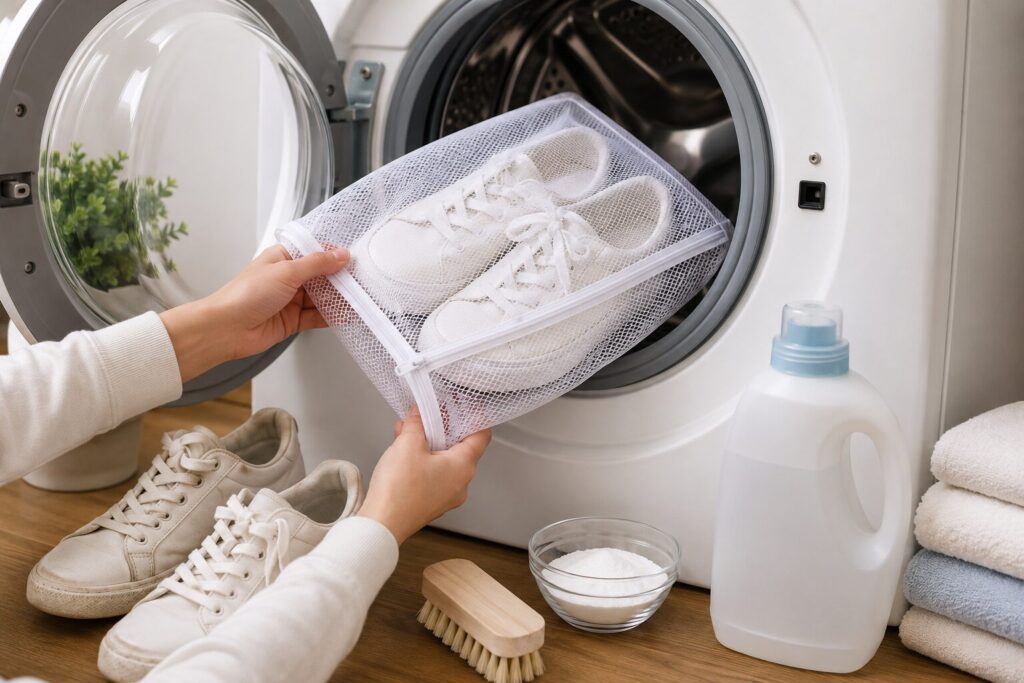
Shoes deal with a lot. They pick up mud, dust, sweat, food spills, grass stains, and all kinds of unpleasant smells. After a while, wiping the surface is no longer enough, and the idea of putting them in the washing machine starts to sound tempting.
The good news is that many sneakers, running shoes, canvas shoes, and fabric shoes can be washed in a machine. The key is knowing which shoes are safe to wash and how to protect them during the cycle.
Most damage does not happen simply because shoes go into a washing machine. It usually happens because the water is too hot, the spin speed is too high, the wrong detergent is used, or the shoes are dried with direct heat. With a little preparation, you can clean your shoes thoroughly without ruining their shape, colour, cushioning, or glue.
How to Wash Shoes in a Washing Machine Without Damaging Them
Before putting your shoes into the drum, take a few minutes to prepare them properly. This makes a big difference to the final result and also helps protect your washing machine from dirt, stones, and an unbalanced load.
Check Whether Your Shoes Are Machine Washable
Not every pair of shoes belongs in a washing machine. The safest place to start is the care label. Some brands include washing instructions on the tongue, inside lining, packaging, or product page.
Shoes made from fabric-based materials are usually the best candidates for machine washing. These may include:
- Canvas shoes
- Fabric sneakers
- Nylon running shoes
- Polyester athletic shoes
- Some washable children’s shoes
- Lightweight gym shoes
Shoes made from leather, suede, nubuck, or other delicate materials should normally be cleaned by hand. Water and agitation can dry out leather, leave marks on suede, weaken decorative details, and cause structured footwear to lose its shape.
You should also avoid machine-washing shoes with loose soles, cracked rubber, damaged stitching, sequins, beads, embroidery, or heavily glued decorations. If part of the shoe is already coming apart, the washing cycle may make the damage worse.
When you are unsure, hand-washing is the safer option.
Remove the Laces and Insoles
Do not place fully assembled shoes straight into the washer. Remove the laces first so water and detergent can reach the fabric around the eyelets and tongue.
Shoelaces can be placed in a mesh laundry bag and washed with the shoes. If they are heavily stained, soak them briefly in cool water with a little mild liquid detergent before washing.
Next, remove the insoles if they come out easily. Insoles often absorb sweat and odour, but many of them are made from foam or layered materials that can lose their shape in the washing machine.
Clean removable insoles by hand using:
- Cool or lukewarm water
- A small amount of mild soap
- A soft cloth or brush
Avoid soaking memory foam insoles for a long time. Too much water can damage the foam and make the insoles difficult to dry.
For smelly insoles, sprinkle a little baking soda over the surface and leave it for several hours. Brush or shake off the powder before cleaning them.
Brush Away Mud and Loose Dirt
Putting muddy shoes directly into the washing machine can spread dirt throughout the drum and may clog the filter.
If the mud is wet, let it dry first. Dry mud is much easier to remove. Knock the soles together outside, then use an old toothbrush, shoe brush, or dry cloth to clean the grooves, seams, and edges.
Check the soles for:
- Small stones
- Gravel
- Twigs
- Chewing gum
- Packed-in mud
Removing this debris protects both the shoes and the washing machine.
For stubborn stains, mix a small amount of liquid detergent with cool water. Apply it to the stained area using a soft brush and leave it for around 10 to 15 minutes before washing.
Do not scrub too aggressively, especially on mesh running shoes. Rough brushing can damage fine fibres or create fuzzy patches.
Place the Shoes in a Mesh Laundry Bag
A mesh laundry bag helps stop shoes from hitting the drum too hard. It also prevents laces and loose pieces from moving around freely inside the machine.
Place each pair in a large laundry bag with enough room for water to move around the shoes. Do not squeeze several pairs into one small bag.
If you do not have a mesh bag, use an old pillowcase. Tie the opening securely so the shoes do not fall out during the cycle.
Washing shoes without a bag is possible, but it usually creates more noise and allows the shoes to bang against the drum.
Add Old Towels to Reduce Noise
Shoes can make a surprisingly loud noise in a washing machine, particularly during the spin cycle. Adding two to four old towels helps cushion the load and keeps the shoes from being thrown around too aggressively.
The towels also help balance the drum, which is especially useful when washing one pair of shoes.
Use old towels rather than delicate laundry. Choose towels in similar colours to the shoes in case any dye transfers.
It is usually better not to wash shoes with regular clothes. Shoes can carry dirt and bacteria from outdoor surfaces, and the hard soles may rub against softer fabrics.
Do not overload the machine with too many towels. The shoes still need enough space to move and rinse properly.
Choose the Best Washing Machine Setting for Shoes
The best washing machine setting for shoes is usually a gentle or delicate cycle with cold water.
Hot water can weaken adhesive, fade colours, shrink fabric, and affect rubber soles. Strong agitation can also damage stitching and cushioning.
Use these settings whenever possible:
- Cold or cool water
- Gentle or delicate cycle
- Low spin speed
- Short wash cycle
- Extra rinse if needed
A front-load washing machine is often gentler on shoes because it tumbles the load without using a central agitator.
If you are washing shoes in a top-load washing machine with an agitator, arrange the shoes and towels evenly around the drum. Do not place both shoes on the same side, as this may cause the machine to become unbalanced.
If your washer has a setting for sportswear or delicate items, that can also be a suitable choice.
Use a Small Amount of Mild Liquid Detergent
Liquid detergent is generally better than powder when washing shoes. Powder may not dissolve fully in cold water and can leave white residue around the seams, mesh, or fabric.
Use less detergent than you would for a normal load of clothes. Shoes do not need a large amount of soap, and excess detergent can become trapped inside the lining.
Too much detergent may leave shoes feeling stiff or cause a musty smell after washing.
Avoid using:
- Fabric softener
- Strong bleach
- Harsh stain removers
- Laundry pods placed inside the shoes
- Strong disinfectants
Fabric softener can leave a coating on breathable materials, while bleach may weaken fabric or cause white shoes to turn yellow.
An enzyme-based liquid detergent may help remove sweat and odour from running shoes or gym shoes, but always check the care instructions first.
Check the Machine During the Wash
Once the cycle starts, listen to the machine. Some gentle thumping is normal, but repeated heavy banging may mean the shoes and towels are not balanced properly.
If the machine starts shaking, moving, or making an unusually loud sound, pause the cycle and redistribute the load.
Place the shoes on opposite sides of the drum and spread the towels evenly around them. Restart the cycle only when the load feels balanced.
Washing one heavy pair by itself can create problems during the spin cycle. Towels are important because they add cushioning and help distribute the weight.
How to Dry Shoes After Washing Them in a Washing Machine
Drying shoes properly is just as important as washing them correctly. High heat can cause more damage than the washing cycle itself.
Air-Dry Shoes in a Ventilated Place
Remove the shoes from the laundry bag as soon as the cycle ends. Pull the tongues forward and open the shoes as much as possible to improve airflow.
Place them in a dry, well-ventilated area away from:
- Radiators
- Heaters
- Fireplaces
- Hairdryers
- Direct sunlight
Strong heat can shrink fabric, warp rubber, crack materials, and weaken the glue that holds the sole in place.
Direct sunlight may also fade dark shoes and leave yellow marks on white fabric.
A shaded area near an open window or fan is usually a better choice.
Stuff the Shoes to Help Them Keep Their Shape
Wet shoes can collapse or lose their shape while drying. Loosely fill them with absorbent material to support the sides and soak up moisture.
You can use:
- Plain paper
- Paper towels
- Clean cotton cloths
- Absorbent shoe inserts
Replace the stuffing when it becomes damp. This helps the inside dry faster and reduces the chance of an unpleasant smell developing.
Avoid using printed newspaper in white or light-coloured shoes. The ink may transfer onto the lining.
Do not pack the shoes too tightly. Air still needs to move through the inside.
Do Not Put Washed Shoes in the Dryer
It may be tempting to put wet shoes in a tumble dryer, especially when you need them quickly, but dryer heat can damage rubber, foam, glue, and fabric.
The tumbling action may also cause the shoes to hit the inside of the dryer repeatedly.
Most lightweight shoes need around 24 to 48 hours to air-dry completely. Thick running shoes, padded sneakers, and shoes with dense cushioning may take longer.
Do not replace the insoles and laces until every part of the shoe feels dry. Wearing damp shoes can lead to bacteria, mould, and lingering odour.
How to Wash White Shoes Without Causing Yellow Stains
White shoes can be more difficult to clean because every mark is visible. They may also develop yellow patches if too much detergent is used or if they dry unevenly.
When washing white canvas shoes or white sneakers, use cold water and a small amount of mild liquid detergent.
Choose an extra rinse cycle if your machine has one. This helps remove soap that may otherwise dry into visible marks.
After washing, dry white shoes in the shade. Strong sunlight can sometimes react with detergent residue, glue, or fabric treatments and leave a yellow tint.
Avoid using chlorine bleach unless the shoe manufacturer clearly allows it. Bleach can damage stitching, weaken fabric, and change the colour of rubber or adhesive.
If a small stain remains after the shoes are dry, spot-clean the area rather than putting the shoes through another full wash immediately.
How to Stop Shoes From Smelling After Washing
Shoes can sometimes smell worse after washing, usually because they dried too slowly or detergent remained trapped inside.
To prevent odour:
- Remove and wash the insoles separately
- Use only a small amount of detergent
- Choose an extra rinse if necessary
- Dry the shoes in a place with good airflow
- Replace damp paper or cloth inside the shoes
- Wait until the shoes are completely dry before wearing them
Once the shoes are dry, you can sprinkle baking soda inside and leave it overnight. Shake it out thoroughly the next morning.
You can also air out running shoes and gym shoes after every use. Removing the insoles and loosening the laces helps moisture escape more quickly.
Common Mistakes to Avoid When Machine-Washing Shoes
A few common mistakes can quickly turn a simple cleaning job into a damaged pair of shoes.
Using Hot Water
Hot water may shrink fabric, fade colour, and soften the glue holding the sole together. Cold water is usually the safer choice.
Leaving the Laces and Insoles Inside
Laces can become tangled, and insoles may absorb too much water. Removing them also allows the shoes to be cleaned more evenly.
Choosing a Heavy-Duty Cycle
A strong cycle creates unnecessary movement. It can damage mesh, stitching, padding, and decorative details.
Adding Too Much Detergent
More detergent does not always mean cleaner shoes. Excess soap can remain trapped in the fabric and create stiffness or odour.
Washing Leather or Suede Shoes
Leather and suede need specialised cleaning methods. Putting them in the washing machine can permanently affect their texture, colour, and shape.
Skipping the Towels
Washing shoes without towels may cause loud banging and an unbalanced drum. Towels provide cushioning and reduce impact.
Using the Tumble Dryer
High heat may warp soles, damage foam, and weaken adhesive. Air-drying takes longer but is much safer.
Washing Shoes Too Often
Frequent machine washing can gradually weaken stitching, cushioning, and glue. Spot-clean light stains whenever possible and save machine washing for shoes that are genuinely dirty.
How Often Should You Wash Shoes in a Washing Machine?
There is no need to machine-wash shoes after every few wears. For most everyday sneakers, occasional washing is enough.
Wash them when they have noticeable dirt, stubborn stains, or an odour that does not improve after airing.
Running shoes and gym shoes may need attention more often because they absorb sweat. Even so, they should not be machine-washed every week unless the manufacturer recommends it.
Regular maintenance can reduce the need for full washes. Try to:
- Brush off dry dirt after use
- Wipe the soles with a damp cloth
- Air shoes after workouts
- Remove insoles to dry
- Treat small stains early
- Rotate between two pairs when possible
These simple habits help shoes stay cleaner and last longer.
Quick Shoe-Washing Checklist
Before starting the washing machine, make sure you have completed these steps:
- Check the care label
- Avoid machine-washing leather or suede
- Remove the laces and insoles
- Brush away dry mud and stones
- Pre-treat stubborn stains
- Place the shoes in a mesh laundry bag or pillowcase
- Add two to four old towels
- Use cold water
- Select a gentle cycle
- Choose a low spin speed
- Add a small amount of mild liquid detergent
- Air-dry the shoes away from heat
- Stuff them with plain paper or clean cloth
- Wait until they are fully dry before wearing them