

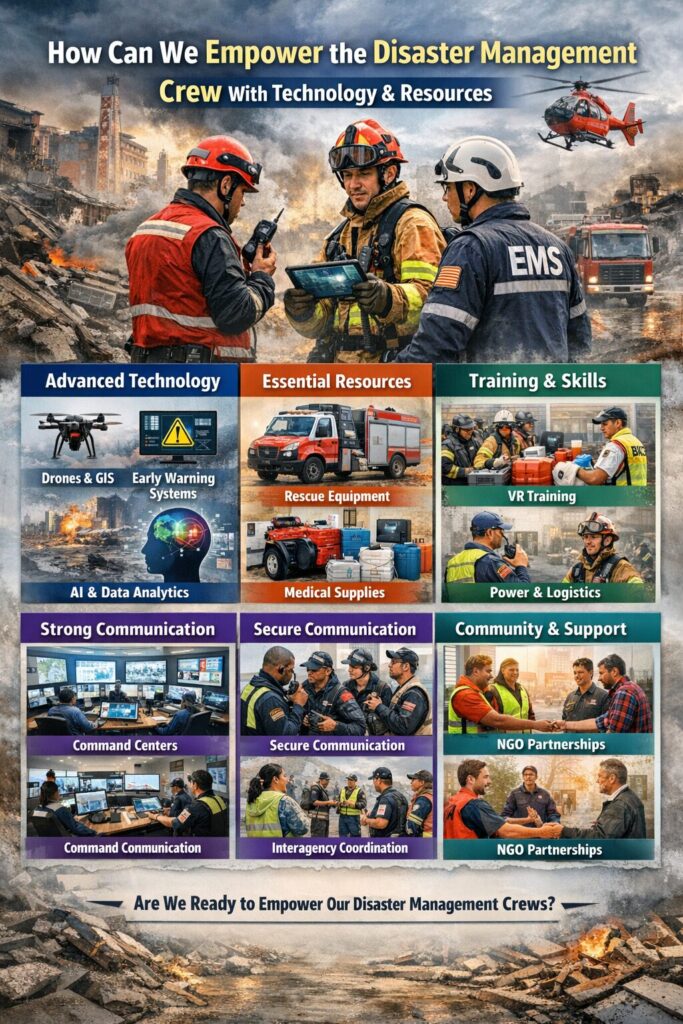
Disasters are becoming more frequent, complex, and unpredictable due to climate change, rapid urbanization, and population growth. From floods and earthquakes to pandemics and industrial accidents, emergency situations demand swift, coordinated, and highly skilled responses. At the heart of every successful response effort is a dedicated team of professionals working under immense pressure. This raises a critical question for governments, organizations, and communities alike: how can we empower the disaster management crew to respond faster, safer, and more effectively? Empowerment goes beyond motivation—it involves providing the right technology, adequate resources, advanced training, and strong institutional support to ensure lives are saved and recovery is accelerated.
How Can We Empower the Disaster Management Crew
Understanding how can we empower the disaster management crew begins with recognizing the challenges they face on the ground. Disaster response teams often operate in hazardous environments with limited time, incomplete information, and strained resources. Empowerment means equipping them with tools that enhance situational awareness, decision-making, and coordination. It also means ensuring their physical safety, mental well-being, and professional growth. When crews are empowered, they can act with confidence, reduce response times, minimize errors, and deliver aid more efficiently to affected communities.
Role of Technology in Disaster Management
Technology plays a transformative role in modern disaster management. Advanced early warning systems allow authorities to detect risks such as cyclones, floods, or seismic activity before they escalate into full-scale disasters. These systems provide disaster management crews with critical lead time to evacuate populations, mobilize resources, and prepare response strategies. Real-time data collection through satellites, sensors, and drones further enhances visibility in disaster zones, allowing teams to assess damage, identify survivors, and prioritize rescue operations.
Digital mapping tools and Geographic Information Systems (GIS) have become indispensable for disaster management crews. These tools help responders visualize affected areas, identify safe routes, and coordinate rescue efforts across multiple agencies. Artificial intelligence and data analytics are also increasingly used to predict disaster patterns, optimize logistics, and allocate resources efficiently. By leveraging technology, disaster management crews gain access to accurate information that supports faster, smarter, and more coordinated decision-making.
Essential Resources Needed for Disaster Management Crews
While technology is vital, it must be supported by adequate physical and logistical resources. Disaster management crews require reliable protective gear, including helmets, fire-resistant clothing, breathing apparatus, and medical kits, to operate safely in dangerous conditions. Without proper equipment, even the most skilled responders face unnecessary risks that can compromise both their safety and mission outcomes.
Transportation and mobility resources are equally critical. Emergency vehicles, boats, helicopters, and all-terrain equipment enable crews to reach remote or heavily damaged areas. Access to fuel, power generators, clean water, and food supplies ensures that operations can continue uninterrupted during prolonged emergencies. Medical resources such as mobile clinics, trauma kits, and emergency medicines allow disaster management crews to provide immediate care before patients can be transferred to hospitals.
Training and Skill Development for Emergency Teams
Empowerment is incomplete without continuous training and skill development. Disaster scenarios evolve rapidly, and crews must be prepared to adapt to new threats and technologies. Regular simulation exercises and mock drills help responders practice real-world scenarios, identify weaknesses, and improve coordination. These exercises also enhance teamwork, communication, and leadership skills under high-pressure conditions.
Digital training platforms, virtual reality simulations, and e-learning tools are revolutionizing disaster management education. They allow crews to train remotely, experience realistic disaster environments, and learn from past incidents without physical risk. Mental health training is also essential, as disaster management crews often face emotional trauma and burnout. Providing psychological support and resilience training ensures long-term effectiveness and well-being.
Strengthening Communication and Coordination
Effective communication is the backbone of disaster response. Empowered disaster management crews rely on secure, reliable, and interoperable communication systems to coordinate with multiple agencies, including police, medical services, military units, and humanitarian organizations. Centralized command and control centers help streamline information flow, reduce duplication of efforts, and ensure accountability.
Modern communication tools such as satellite phones, encrypted messaging platforms, and real-time dashboards enable seamless coordination even when conventional networks fail. Clear communication protocols and shared data platforms further enhance collaboration, ensuring that all responders operate with the same situational awareness and objectives.
Community Support and Public Engagement
Empowering disaster management crews also involves engaging communities as active partners in disaster preparedness and response. Trained volunteers, local organizations, and community leaders can provide valuable support during emergencies by sharing local knowledge, assisting evacuations, and distributing aid. Public awareness campaigns and preparedness programs help communities understand risks, follow safety protocols, and cooperate effectively with response teams.
Partnerships with non-governmental organizations and private sector entities further strengthen disaster response capabilities. These collaborations provide access to additional resources, expertise, and innovative solutions that enhance overall resilience.
Challenges in Empowering Disaster Management Crews
Despite technological advancements, several challenges hinder efforts to fully empower disaster management crews. Limited funding often restricts access to modern equipment, training programs, and maintenance of critical infrastructure. In some regions, outdated policies and bureaucratic barriers slow down decision-making and resource deployment.
Technology adoption can also be challenging due to lack of training, resistance to change, or compatibility issues between different systems. Addressing these challenges requires long-term investment, policy reform, and a commitment to continuous improvement.
Future Innovations in Disaster Management
The future of disaster management lies in innovation and integration. Smart cities equipped with Internet of Things (IoT) sensors can provide real-time data on environmental conditions, infrastructure health, and population movement. Autonomous drones and robotic systems can assist in search and rescue operations in hazardous or inaccessible areas. AI-driven platforms will continue to enhance prediction, planning, and response efficiency.
By embracing innovation and fostering collaboration, societies can build resilient systems that empower disaster management crews to meet future challenges with confidence.
Conclusion
In answering how can we empower the disaster management crew, it becomes clear that empowerment is a multifaceted process. It requires the strategic use of technology, adequate resources, continuous training, effective communication, and strong community engagement. Investing in disaster management crews is not just an operational necessity—it is a moral responsibility. When responders are empowered, lives are saved, recovery is faster, and communities emerge stronger and more resilient. Long-term commitment, innovation, and collaboration will ensure disaster management crews are always prepared to protect lives when it matters most.